
Our Story
The forest has been doing this for centuries.
We just learned to listen.
What we stand for
Three principles.
No exceptions.
Nothing added.
Kasé contains exactly one ingredient: birch sap. No sugar, no preservatives, no flavor enhancement. The label says everything — because there is nothing to hide.
Finite by design.
We do not scale production to meet demand. We produce what the forest gives us each spring. When allocations are filled, they are filled. This is not scarcity marketing — it is the honest constraint of working with nature.
Rooted in place.
Kasé has the specific mineral profile, the wild fermentation cultures, the character of the sap — these are products of a particular place. They cannot be replicated elsewhere, and we have no interest in trying.
What the forest provides
01
Naturally mineral-rich
Birch sap carries the minerals of the forest — silica, potassium, manganese — absorbed as it rises through the tree.
02
Zero additives
Nothing is added at any stage. No preservatives, no sweeteners, no flavourings. Just sap and time.
03
Wild fermentation
Fermentation is driven by the sap's own native microflora — no commercial cultures, no shortcuts.
04
Single origin
Every batch comes from one forest in Estonia. The terroir is real and it changes subtly year to year.
05
Low sugar
Wild fermentation consumes most of the sap's natural sugars, leaving a dry, clean finish with minimal residual sweetness.
06
Annual harvest only
Three weeks a year. That's the window. Production is finite by nature, not by design.
How Kasé is made
Three steps.
No shortcuts.
01
Tap
Each spring, as temperatures rise above freezing, birch sap begins to flow. We tap the trees by hand during this narrow three-week window.
02
Ferment
The fresh sap is transferred to vessels and left to ferment naturally for six months. No cultures are added — the sap's own microflora drive the process.
03
Bottle
After fermentation is complete, Kasé is filtered and bottled. Nothing is added. The result is exactly what the forest produced.
50%
of Estonia is forest
Where it begins
Estonia. 50% forest. One of the cleanest environments on Earth.
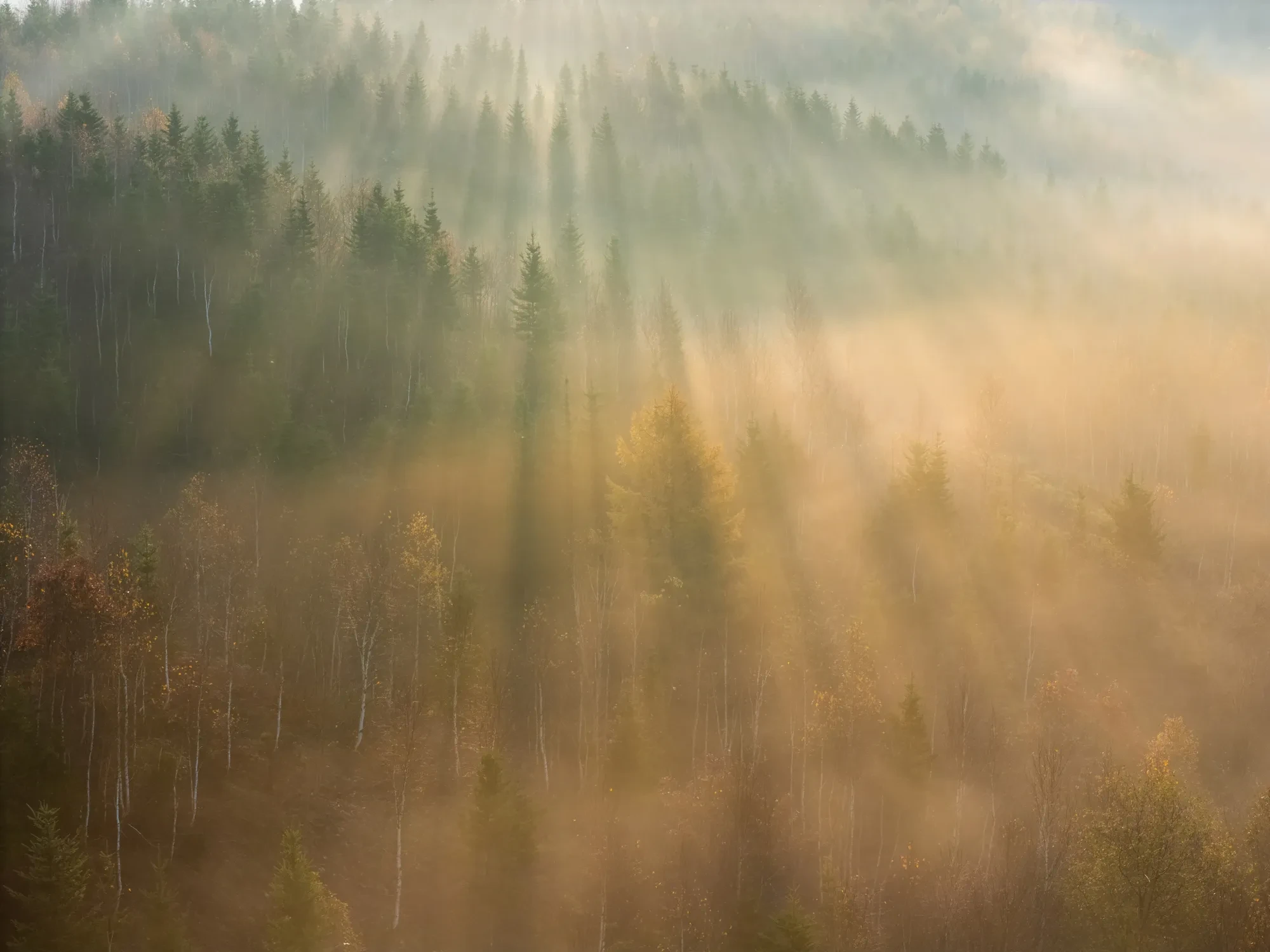
Estonia is a small country on the Baltic Sea with an outsized relationship with its land. More than half the country is covered in ancient forest — birch, pine, and spruce stretching to the horizon in every direction.
The air is clean. The water table is untouched. The soil carries no industrial residue. When a birch tree draws water from the earth here, it draws from something genuinely pristine.
This is not marketing language. Estonia consistently ranks among the top five countries in the world for environmental performance. The land is the product.
The harvest
Two weeks. Once a year. Nothing more.
In early spring — typically late March to mid-April — as temperatures climb above freezing for the first time, birch trees begin their annual sap ascent. The sap rises from root to canopy, carrying minerals, sugars, and compounds the tree has stored through winter.
The window is brief. Two to three weeks at most. We tap the trees by hand, collect the sap in small batches, and then the season closes. There is no second harvest. There is no off-season production. What we collect in those weeks is all there is.
"The window is two weeks. The wait is twelve months."


The fermentation
Six months. No intervention.
Fresh birch sap is delicate — slightly sweet, faintly mineral, almost imperceptible in flavor. Left alone, it begins to ferment naturally within days. Wild yeasts and bacteria present in the sap initiate a slow, complex transformation.
We seal the sap and let it work. No added yeast. No temperature control. No shortcuts. For a minimum of six months, the fermentation proceeds at its own pace, developing the mineral depth, faint effervescence, and clean tartness that defines Kasé.
The result is not wine. It is not kombucha. It is not water kefir. It is something the Baltic and Nordic cultures have known for centuries — and something the rest of the world is only beginning to discover.

We didn't invent this.
Baltic and Nordic peoples have been drinking birch sap for centuries — as a spring tonic, a remedy, a ritual of renewal after the long winter. Kasé is that tradition, taken seriously. Bottled with care. Shipped to the United States for the first time.